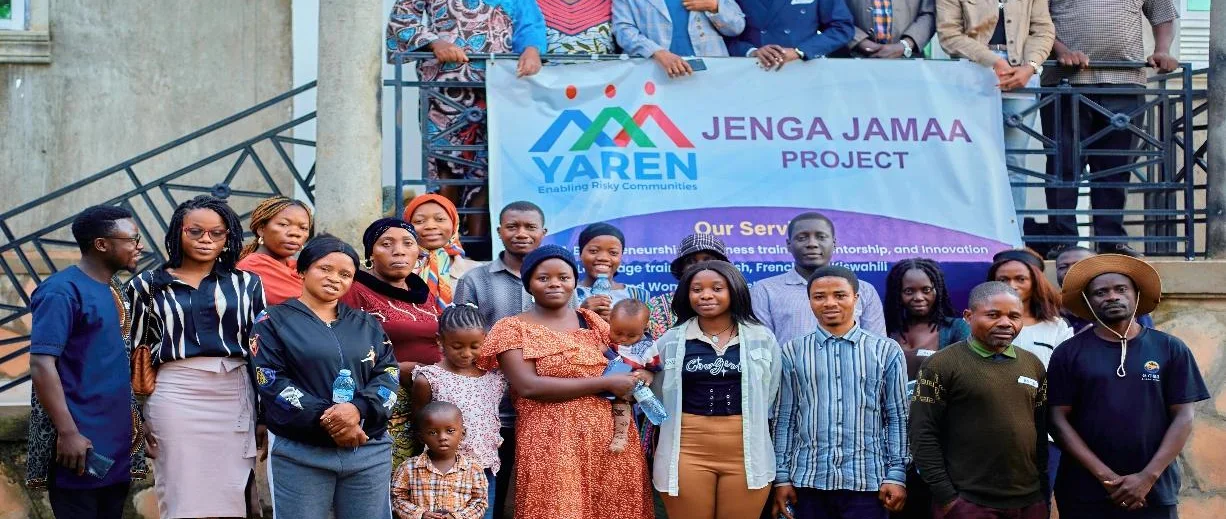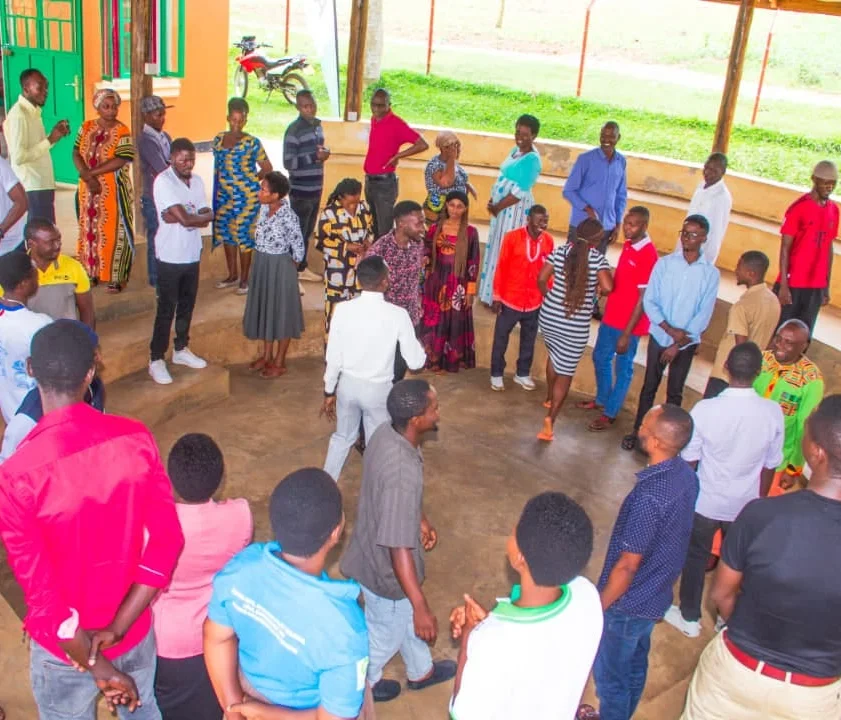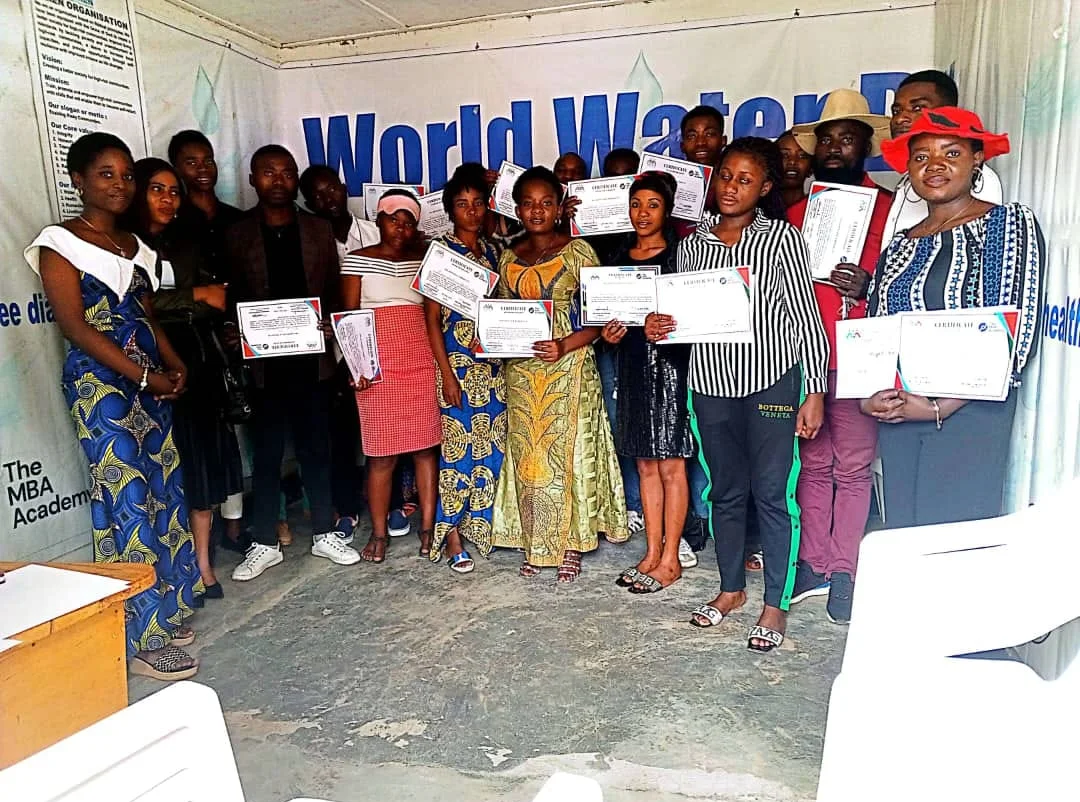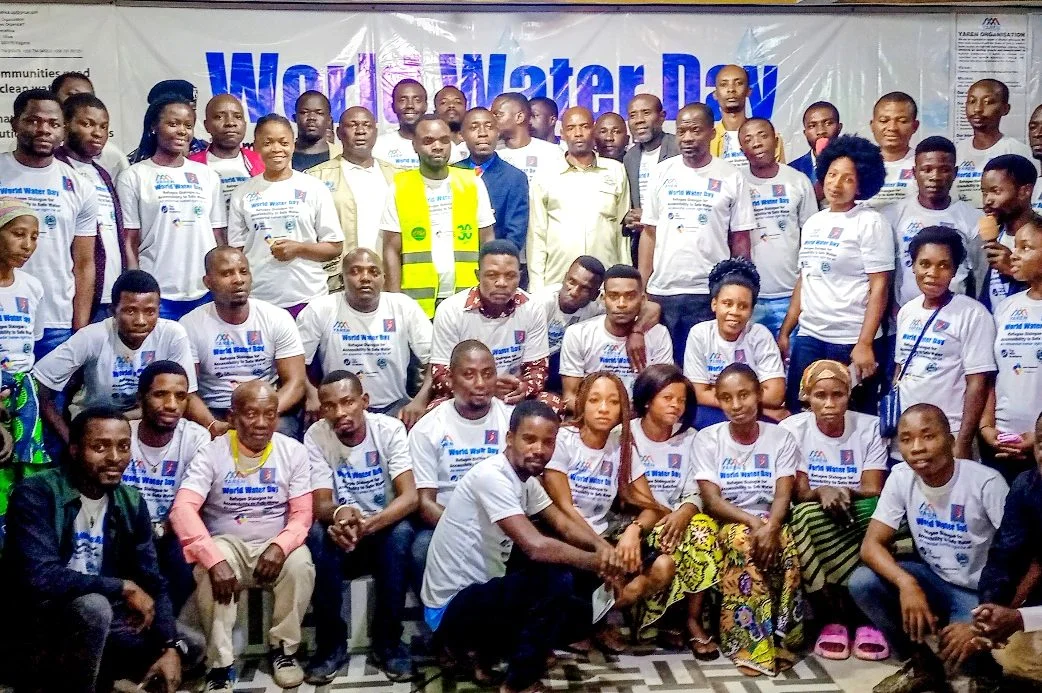
In Nakivale Refugee Settlement, everyone talks about water: at the tap, at the well, at home when the jerrycan is empty. What refugees did not have was a place to say it to the people responsible for it. On 24 March 2023, YAREN created one.
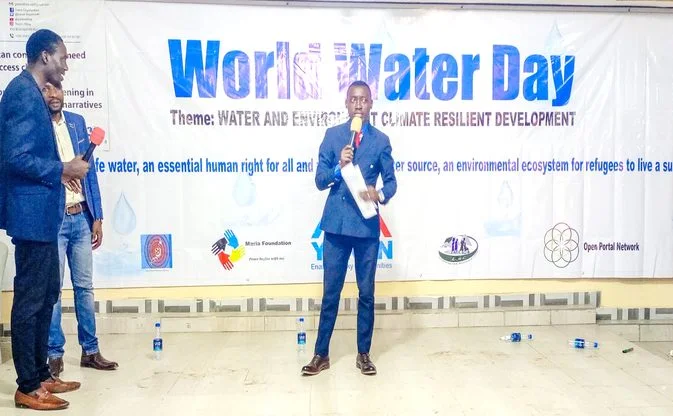
The refugee dialogue was held in the DHL event hall in New Hope village, under the theme Water and Environment: Climate Resilient Development. Its goal was simple: an open, inclusive space where refugees could take a real part in decisions about their own water.
01The groundwork
A week of listening first
The dialogue was the last day of a week of work. Before anyone spoke on a panel, YAREN's team went to the wells.
16–19 Mar
Meeting stakeholders
20–21 Mar
Visiting wells and the families who use them
22 Mar
World Water Day with UNHCR at Rubondo
23 Mar
Setting up
24 Mar
The refugee dialogue
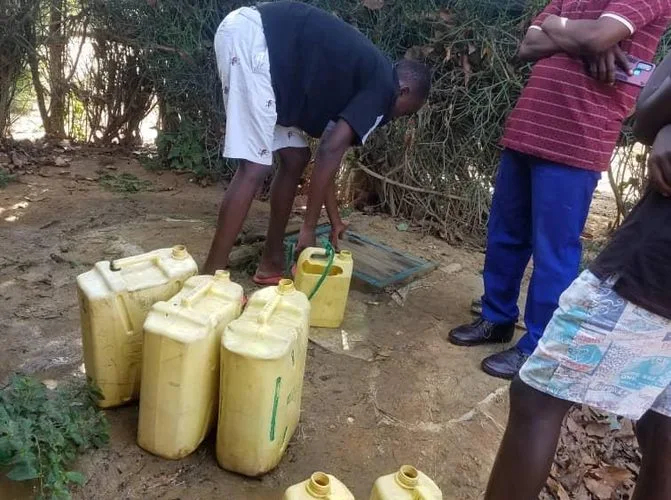
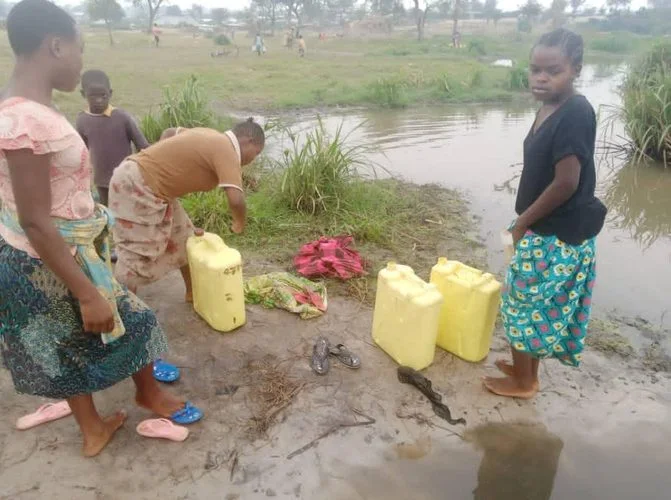
The team visited 29 hand-dug wells across four villages, talking with the people who own and run them. They taught personal hygiene, the five critical moments for handwashing, and the safe water chain: keeping water clean at every step, from the source to the cup.
15
wells in New Hope
5
wells in Kashojwa
5
wells in New Congo
4
wells in New Kigali
02Who was in the room
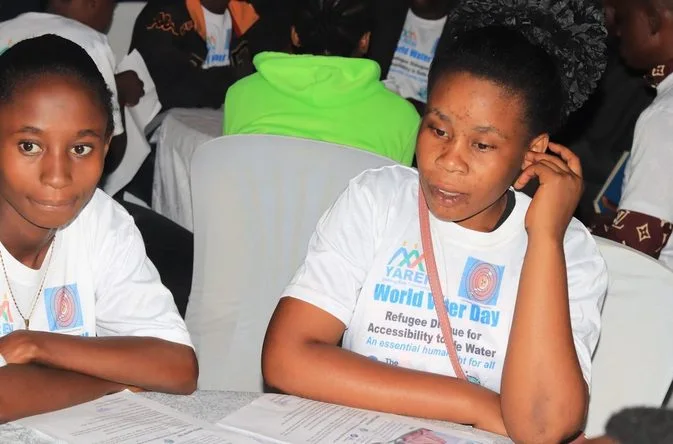
One hundred and twenty voices
Refugees and Ugandan nationals. Host communities from Isingiro. Well owners and water sellers. Schools, water user committees, refugee leaders and refugee-led WASH organisations. Clinics still using the water filters YAREN placed in 2021. And, across the table, government representatives, including the District Water Officer.
- people in the hall, 51 men and 44 women
- 95
- more following online
- 25
- panellists
- 6
- discussion groups
- 4
03The panel
The people responsible, in one place
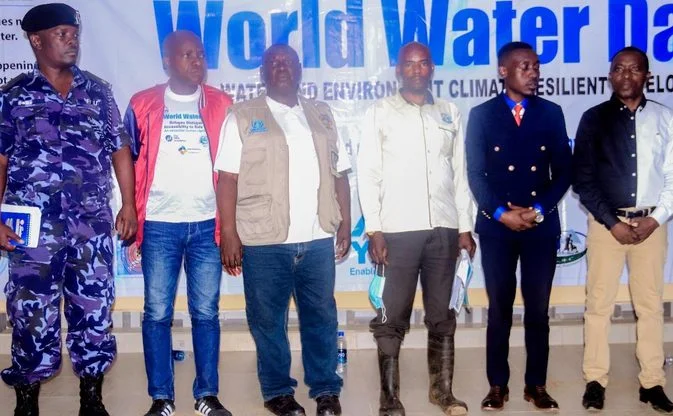
Six panellists faced the room: the Isingiro District office for water and environment; Nsamizi, the water implementing partner for UNHCR and the Office of the Prime Minister; Medical Teams International; the settlement's refugee welfare council; the Association of CBOs in Nakivale; and the local police, who spoke on protecting the hand-dug wells.
04What the community said
Four groups, one answer
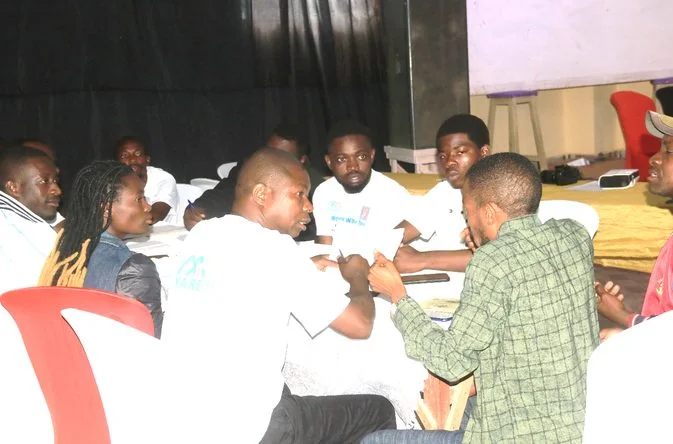
Participants split into four groups: local leaders, women heads of household, schools and clinics, and well owners and water sellers. Each discussed the problem from its own side. All four agreed that access to water in Nakivale is in serious trouble.
Too few taps
Not nearly enough for the number of families who depend on them.
Too little water
Often one jerrycan per household, after a long walk in the sun.
Days without water
Two, three days, sometimes a week with nothing at the taps.
Unsafe water
Sometimes unfit to drink, with colour, smell or debris in it.
The groups also spoke about what the shortage costs. Women and girls who have to fetch water late at night or very early in the morning are exposed to sexual violence. Well owners have no chlorine to disinfect their wells, and many wells have unprotected walls that keep collapsing. Some participants raised reports of abuse linked to getting water, which YAREN committed to follow up with the responsible authorities.
05The invisible enemy
Water you cannot trust
Unsafe water does its damage quietly. Children sent to fetch water often bathe in it. When someone falls ill with typhoid, families can end up blaming each other for poisoning or witchcraft, and only learn the real cause at the hospital. Participants reported that most deaths in the settlement come from waterborne diseases: cholera, typhoid, dysentery and hepatitis.
On the colour of the water
Refugees nicknamed the water in one part of the lake “Bidamu”: Swahili for a lot of clotted blood on the ground.
06Questions and answers
A plan for tomorrow, a problem today
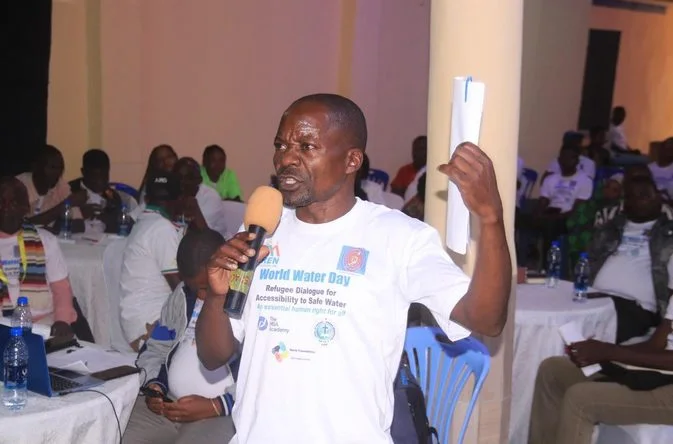
Participants asked the panel directly: why are there so few taps? Why does water stop for days, and why is it sometimes dirty? Why are some households never served?
Nsamizi explained that new refugees arrive every day and the population is larger than the water system can carry. The answer did not fully convince the room. The Isingiro District office described a long-term plan, funded by the governments of Uganda and France, donors and UNHCR, to bring water from the River Kagera to the settlements, and agreed to support YAREN and invite it to present its WASH work.
A pipeline is a durable solution. It does not help a family whose jerrycan is empty tonight.
What participants recommended
- Polluted water sources
- Teach communities about clean water, stop the washing of vehicles and clothes near sources, use chlorine, and set penalties for polluting.
- Not enough water
- More water points in schools and communities, storage tanks, and rainwater harvesting.
- Unsafe hand-dug wells
- Solar-powered boreholes with filtration, treatment tablets at water points, and better-built wells.
- Too few tanks
- Plastic tanks, or tanks built locally from sand and cement.
07Why it mattered
Refugees at the table
The dialogue answered a problem that went beyond water: refugees had no space to talk about it. For one day, the people who carry the jerrycans and the people who plan the pipes sat in the same room and heard each other.
YAREN left with a clear request: special attention for a large-scale project, for refugees and host communities alike, to save lives threatened by waterborne disease. Until then, treating the water in local wells and adding storage tanks answers a real problem now.
Organised by YAREN with support from The MBA Academy, Anti-Nuclear Water Waste Discharge and LO-OP Center / Open Portal Network, which streamed the dialogue live, in collaboration with Living in Christ Omega (LICOM), ACBON, Maria Foundation and the Learning Assistance Centre.