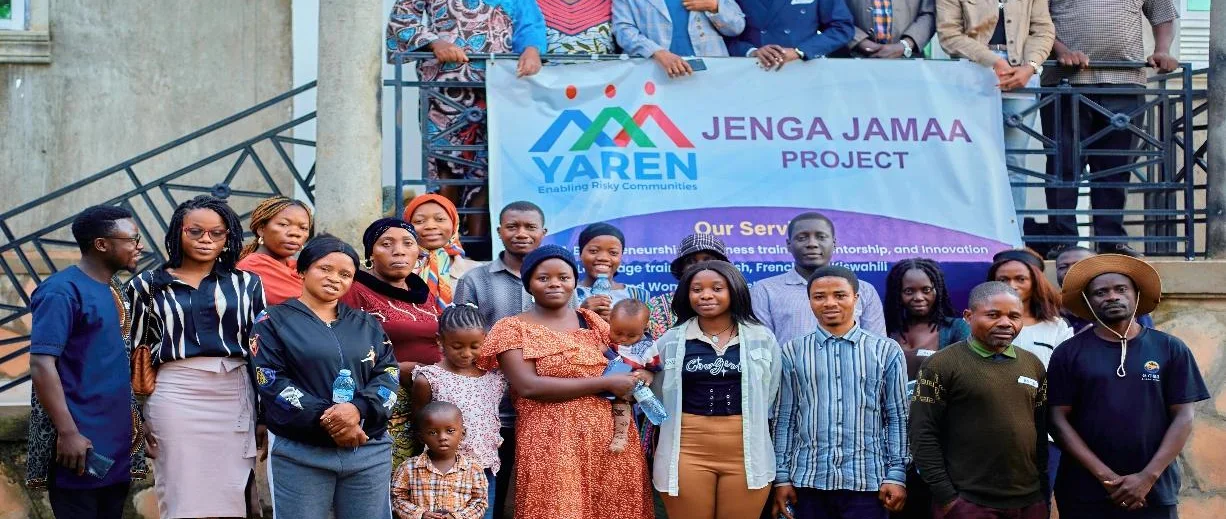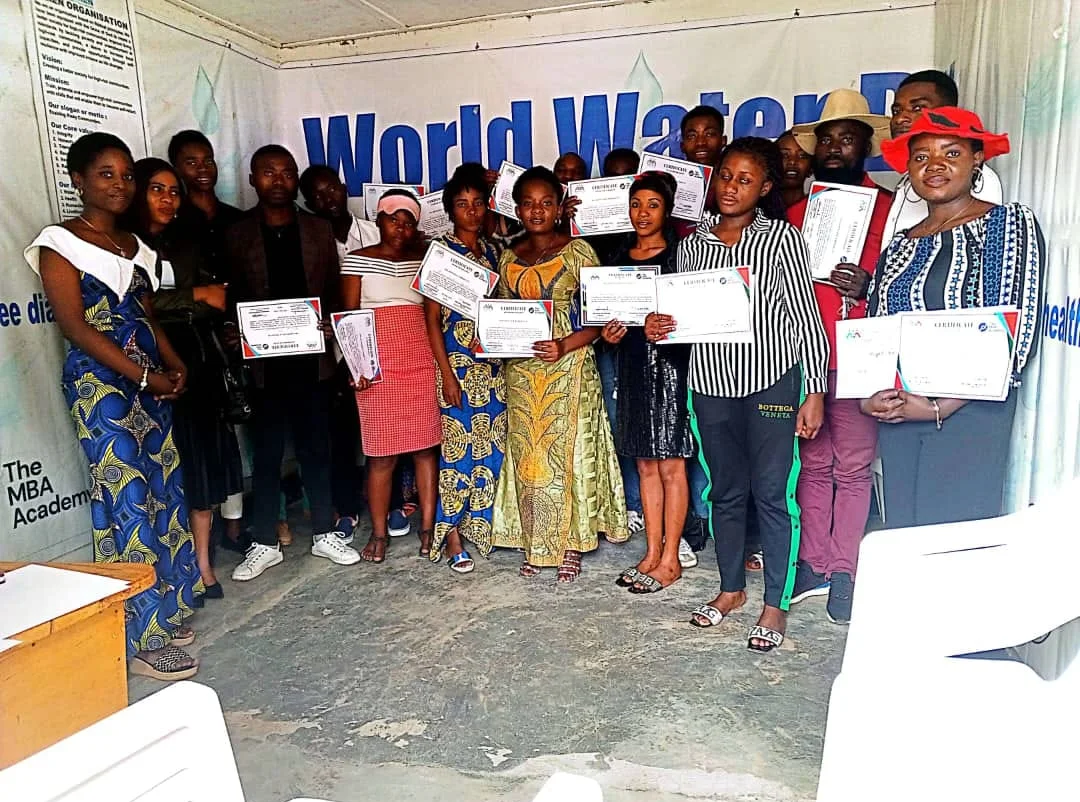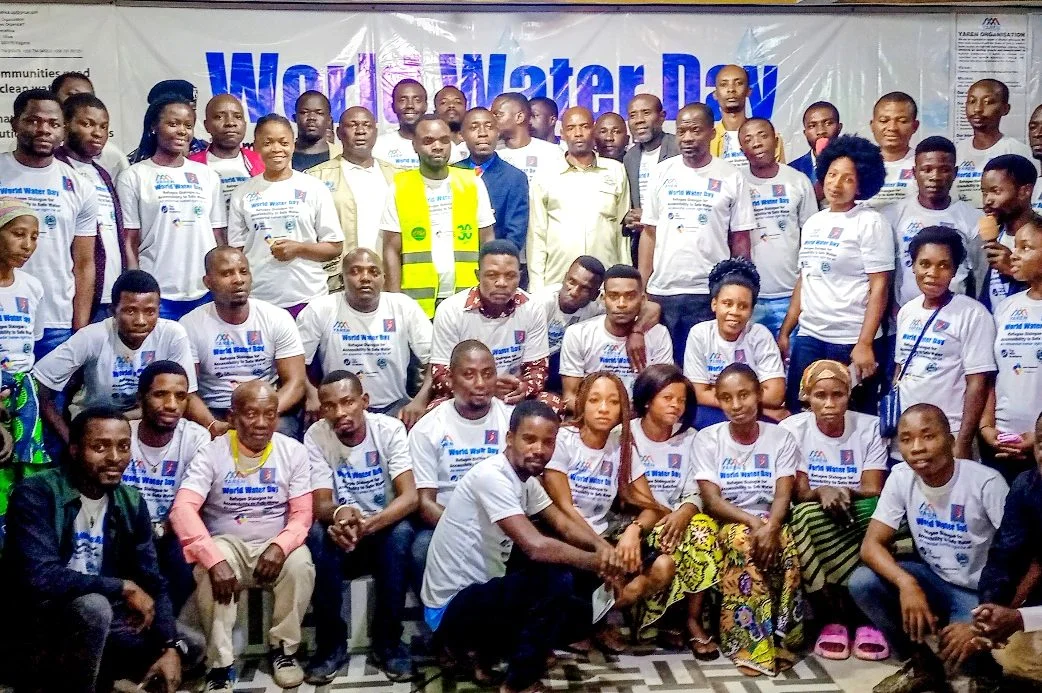
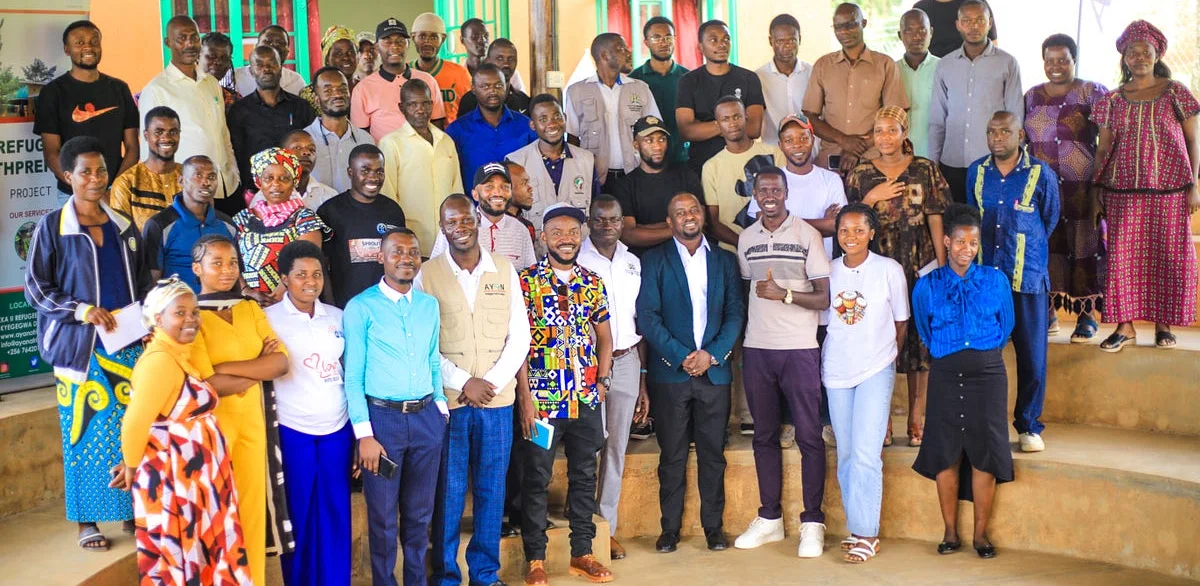
A lot of business training starts with money: how to borrow it, count it and spend it. Personal Initiative Training starts with the person. From 29 September to 3 October 2025, 58 refugee and host-community entrepreneurs in Kyaka II Refugee Settlement spent five days learning to think and act differently.
The training was part of the Pathpreneur Project run by the African Youth Action Network (AYAN), funded by the Hilton Foundation. It was designed and led by YAREN's Founder and Executive Director, Muganuzi Mushongole Adonis, under AYAN's supervision.
- participants
- 58
- women
- 23
- men
- 35
- days of training
- 5
- South Sudanese
- Burundian
- Rwandese
- Congolese
- Ugandan host community
01Mindset before money
Act first, before you are asked
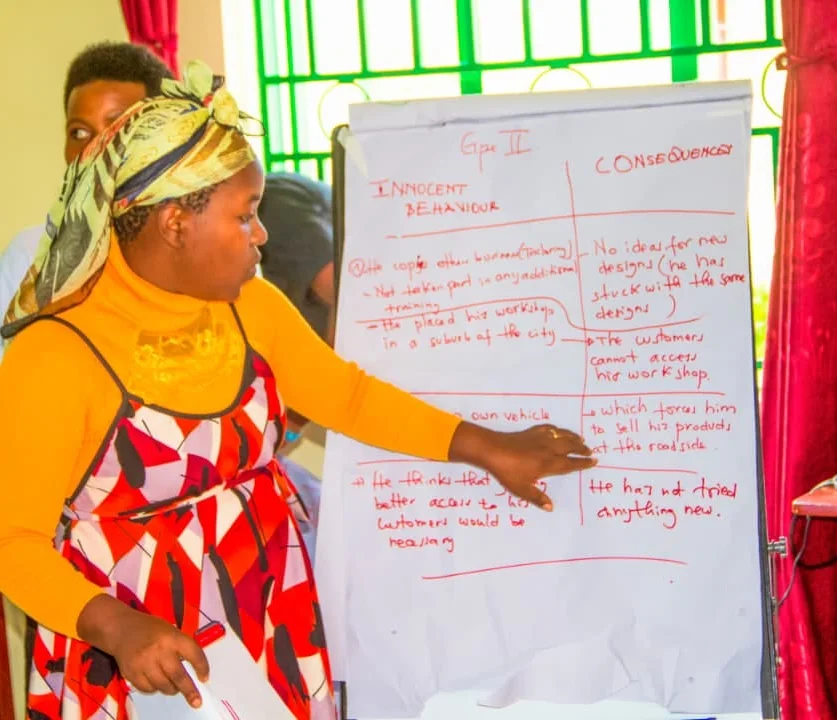
Life in a settlement is shaped by things outside people's control: distributions, programmes, permissions. Personal Initiative Training focuses on what people can control. It helps people move from reacting to problems to getting ahead of them, setting their own goals and sticking to them when plans change.
Over the five days, participants worked through four big ideas:
01
Self-starting behaviour
Doing what needs to be done without waiting to be told or helped.
02
Overcoming barriers
Naming what could go wrong, and planning a way around it.
03
Ideas into opportunities
Spotting needs around you and shaping them into a business idea.
04
A plan to act on
Goals, simple financial planning, and a written action plan to take home.
02Learning through play
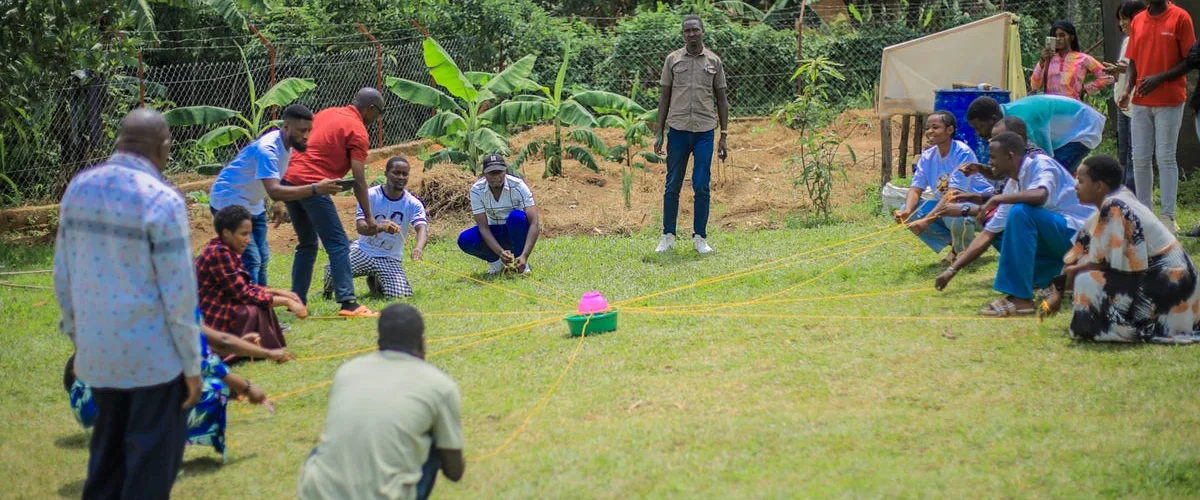
The bottle game
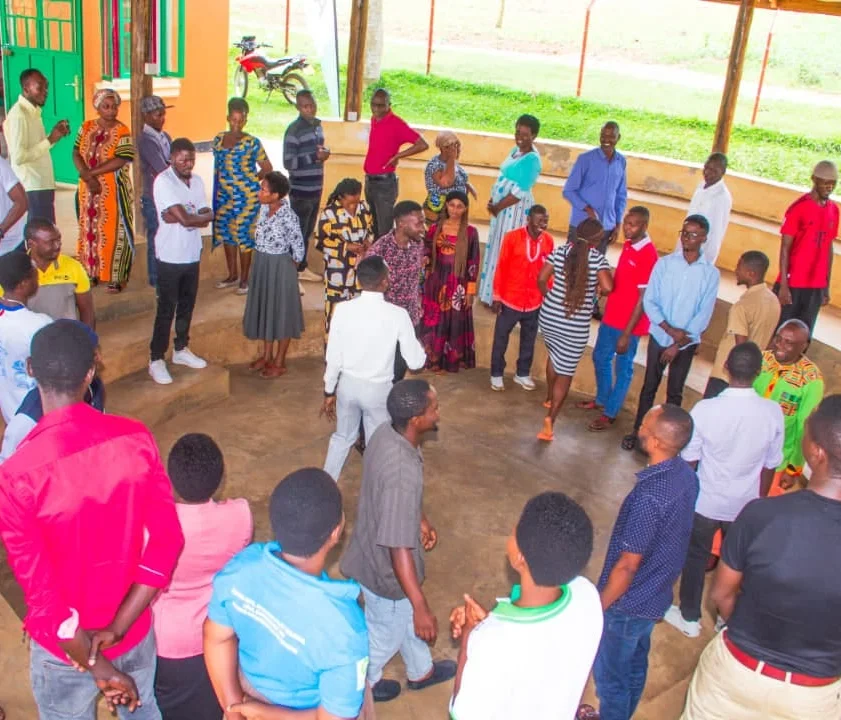
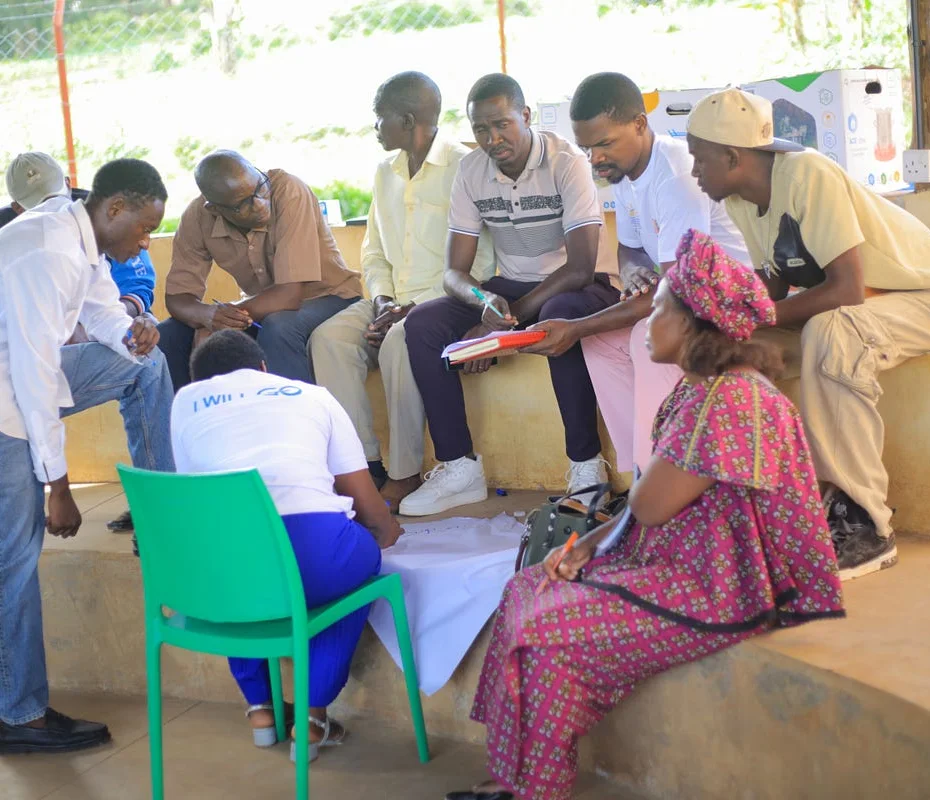
Sessions mixed theory, practice and shared experience, with plenty of games and group work. In the bottle competition, teams played against each other in a game built around setting goals and getting past barriers, and the winning group was awarded at the end.
03Proof in the room
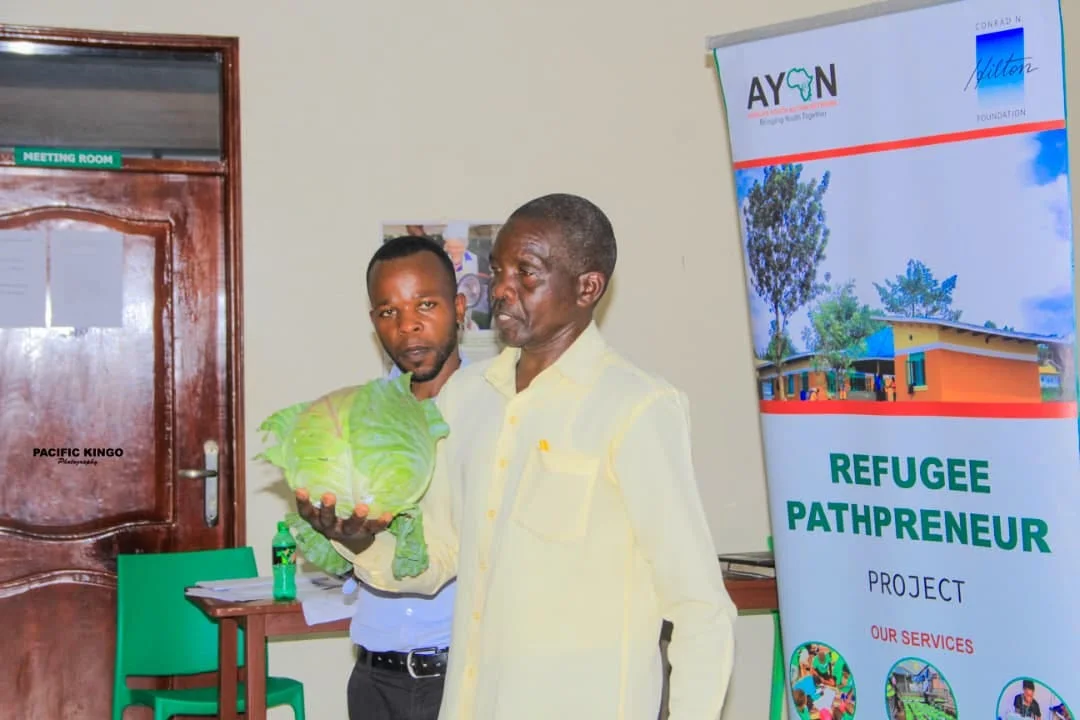
Mr Benone came back with cabbages
The strongest lesson of the week did not come from the facilitator. Mr Benone had taken Personal Initiative Training in January 2025. He put what he learned into practice and became a supplier of cabbages and greens.
Nine months later, he stood in front of the new group to tell his story. On the same day, he sold UGX 46,000 of produce to his fellow participants. Another participant sold all of her handmade soap before the training had even ended.
- from training to a working business
- 9 months
- sold to fellow participants on the day
- UGX 46,000
04In their words
Transformative, practical, life-changing
That is how participants described the training. Many said it was unlike any they had attended before. The mix of nationalities helped too, and people learned from each other as well as from the sessions.
A participant, Kyaka II
“I discovered that in business, mistakes are the best lessons to learn from.”
Another participant
“I learned to set goals and remain focused, even when plans change.”
They also asked for three things: that donors trust and fund this approach, that it be resourced to reach many more refugees, and that future trainings add mentorship and longer sessions.
05Beyond Kyaka II
More than 200 entrepreneurs in 2025
Kyaka II was followed by trainings in Kiryandongo, Rhino Camp and Kyangwali before the end of 2025. Together with earlier cohorts, YAREN trained more than 200 refugee and host-community entrepreneurs that year.
Sep–Oct 2025
Kyaka II
58
participants
Oct 2025
Kiryandongo
51
participants
Nov 2025
Rhino Camp
50
participants
Dec 2025
Kyangwali
86
participants
Muganuzi Mushongole Adonis, Founder & Executive Director
“The Personal Initiative model has been instrumental in building entrepreneurial mindsets and resilience among refugees and host community members.”